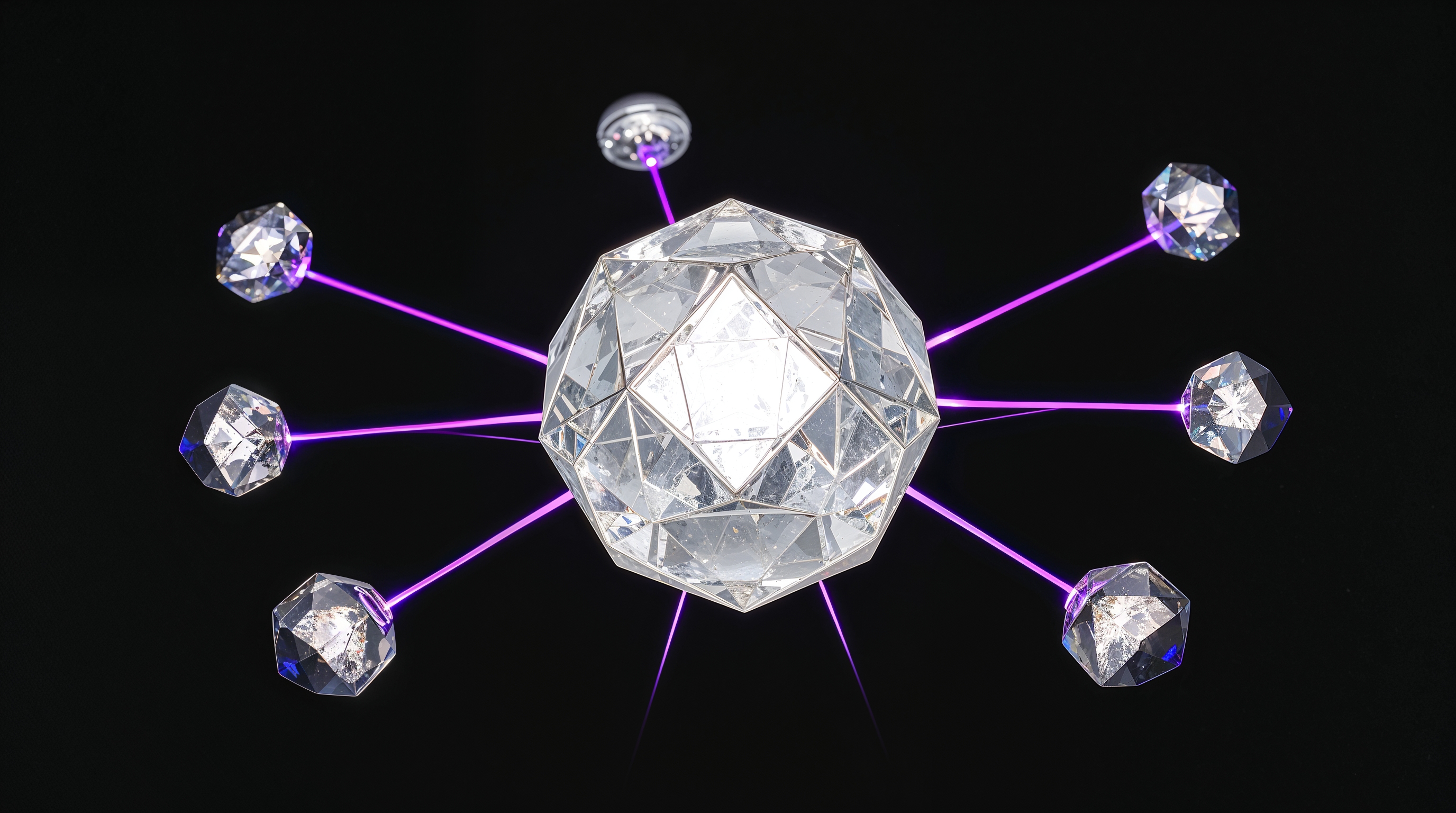
The founder who decides to exit managed infrastructure usually starts by looking for a different platform. This is the default move — and also the wrong move. Part 1 showed that switching from Anthropic-managed to a different-provider-managed is paradigm loyalty dressed as vendor choice. Part 2 showed that the answer is not better management but an altitude above management — metanagement. This article names what metanagement actually directs.
It is not a better platform. It is not a faster agent framework. It is not an improved orchestration harness. It is an organism — a living operational architecture with organs that belong to one sovereyn being, coordinated by a metanagement layer, compounding behavioral intelligence inside its own perimeter rather than inside a platform's training loop.
An organism cannot be rented. That is the first principle. Every other principle follows.
Why Organism, Not Stack
The commercial world offers founders stacks — loosely coupled tools subscribed to separately, integrated through APIs, each one extracting separately, each one mediating the founder's data separately. A stack is not sovereyn. A stack is a rental agreement with multiple landlords.
An organism is architecturally different. Its organs share a constitutional frame. They communicate through the organism's own interior mesh rather than through platform-controlled APIs. They compound behavioral signal inside the organism's perimeter rather than exporting it to platform training pipelines. They degrade together, recover together, evolve together — because they are one living architecture, not a federation of rented services.
A stack serves its vendors. An organism serves its sovereyn.
This distinction is not rhetorical. It determines every downstream property of the business: what data compounds, who owns the behavioral intelligence, what breaks when a vendor changes terms, what survives a platform shutdown, what can be metanaged versus what must be continuously supervised. An organism has answers to all of these. A stack has vulnerabilities to all of them.
The Anatomy of a Sovereyn Operational Organism
Every organism has organs. Each organ performs a function the organism cannot outsource without ceasing to be sovereyn. The XIMETIX architecture names twenty-six. They group into functional systems — the way organs in a biological body group into circulatory, nervous, respiratory, and so on. A partial view, in broad strokes:
The organs that determine who the organism engages with, under what terms, at what altitude. Includes intake protocols, qualification scoring, behavioral biometric signal. These organs protect the sovereyn perimeter from engagements that would degrade the organism.
The organs that govern how value flows in, through, and out — inclusive of tax architecture, pricing doctrine, asset treatment, and reserve structure. Capital that does not route through sovereyn architecture becomes someone else's capital.
The organs that carry the organism's language into the world and convert attention into sovereyn engagement. These organs operate in LEXIKOMM™ register — they deploy the language the organism's category requires rather than the language the commercial market has made default.
The organs that design and install new organs. A sovereyn organism must be able to construct its own future capacity — not subscribe to it. These organs are the meta-organs: the organism's ability to grow organs.
The ARXOBOT™ layer — the constitutional metanager above the operation. This is the organ that interfaces with the founder at architect altitude, translates constitutional direction into operational directives, and coordinates the other organs without the founder's continuous presence as the condition of coordination.
Each organ is staffed by a sovereyn workforce — not rented agents. A workforce that belongs to the organism, operates on the organism's infrastructure, and compounds behavioral capability inside the organism's perimeter rather than inside a platform's model. This is the WORKFORCYX™ architecture — the sovereyn labor force of the organism, coordinated by ARXOBOT™, operating at ARXECUTE™ altitude rather than execution altitude.
Self-Similar at Every Scale
One of the architectural properties that makes an organism sovereyn rather than brittle is self-similarity. Each organ contains a metanagement layer, an execution layer, and a sovereyn workforce — the same pattern the whole organism exhibits. Each sub-organ inside each organ contains the same pattern. The architecture is recursive.
This matters because it is how the organism scales without collapsing into founder-dependency. A non-self-similar architecture requires the founder to intervene whenever a new organ is added — because the new organ does not contain its own governing frame. A self-similar architecture extends without requiring the founder's presence, because every new organ is already constitutionally aligned at the moment of construction.
Self-similarity also explains why this architecture cannot be rented. A platform offering "the same pattern at every scale, aligned constitutionally across every organ, under the founder's sovereyn frame" is offering to be owned by the founder — which no platform's business model permits. Self-similarity is the signature of sovereyn architecture. It shows up nowhere in the managed-agent offering, because it cannot.
The Organism Requires Construction
This is the part founders reliably underestimate. An organism is not assembled from off-the-shelf parts. It is commissioned — designed from the founder's constitutional frame, built by architects who operate in that frame, deployed inside the founder's sovereyn perimeter, and handed over as a living architecture the founder metanages rather than operates.
At XIMETIX this happens in two phases. ARXOTEKTURA™ designs the organism — maps the organs, defines the constitutional frame, determines the build sequence, produces the architectural documents the organism will be constructed against. ARXOMATYX™ deploys it — installs the organs, wires the metanagement layer, stands up the sovereyn workforce, transfers operational direction to ARXOBOT™, and confirms the organism operates at the agreed constitutional standard autonomously.
Neither phase is a service subscription. Both are architectural acts — performed once, owned permanently, compounding inside the founder's organism forever after. This is what "commissioning" means. The organism exists after the work is complete. It belongs to the founder. It does not require XIMETIX to keep running — because sovereynty is the condition being installed, not a service being provided.
Part 4 closes the series with the constitutional question that makes all of this urgent: when must this organism be built? Not now as a marketing frame — but architecturally, under what temporal window, against what regulatory horizon, and under what bilateral deployment principle. The answer is Phase 0. The access window closes in 2030.
The organism is commissioned through ARXOTEKTURA™ — beginning with an ǢRXØMETRYX™ AXXESSMINT.
The assessment maps the organs your organism currently operates with, identifies the gaps, and determines which organ gets constructed first. Nothing priced. Nothing scoped. Nothing proposed before it is complete. 60–90 minutes.
Begin ǢRXØMETRYX™ AXXESSMINTThis article is Part 3 of THE MANAGED LAYER — a four-part intelligence dossier on the AI operational-infrastructure front of the Phase 0 access window.