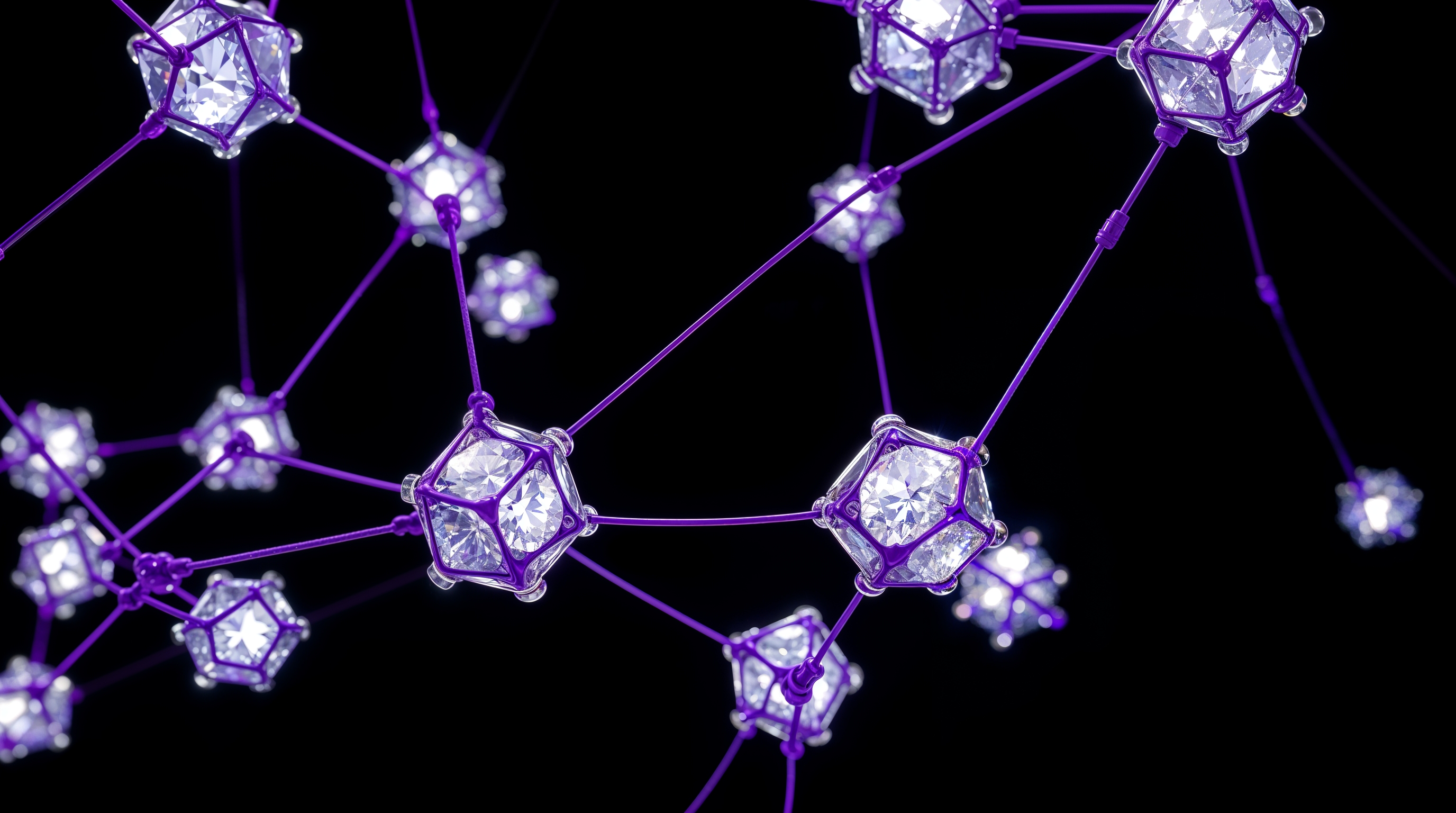
Part 1 of this series named the intermediation architecture Google has now completed. The response most brands will reach for is a tactical one — improve the landing page, submit cleaner structured data, hope the AI generator produces something close to what the brand would have built. This is defense by compliance. It is not sovereyn.
The sovereyn response is architectural: stop building a single website to defend, and build a mesh — multi-node web presence where no single node is the single point of failure, no single platform controls the routing, no single vendor can intermediate the user-to-brand relationship, because the relationship was never centralized on a single site in the first place.
This is not a technical upgrade. It is a category shift. The difference between a website and a web mesh is the difference between a castle and a city. A castle is a single defensible point. A city is an organism with multiple organs, redundant routes, independent systems, and resilience that comes from distribution rather than fortification. Google's patent can take a castle. Google's patent cannot take a city.
Why The Single-Site Model Was Always A Trap
The commercial web sold founders one architecture for three decades: build a single website, optimize it for Google, drive all traffic through it, let the platform determine who sees it. This was never sovereyn. It was centralized dependency presented as independence. The website the brand "owned" was:
| Layer | Who Actually Controlled It |
|---|---|
| DNS / domain resolution | The registrar (revocable) |
| Hosting / rendering | The hosting provider (changeable terms) |
| Discovery / routing | Google's ranking algorithm (opaque) |
| Commerce / payments | Stripe / PayPal / checkout platforms |
| Analytics / data | Google Analytics (now Google's training signal) |
| Ads / amplification | Google Ads + Meta Ads (bidding wars) |
| Content / storage | WordPress / Shopify / Webflow (subscription) |
Every one of those layers is a rental agreement. The brand "owns" the website the way a tenant "owns" the apartment — the name is on the lease, but the landlord can change the terms any time, raise the rent, redecorate the lobby, or evict the tenant entirely. Google's patent is the landlord announcing that henceforth the lobby will be redecorated automatically by the landlord's AI, and the tenant will be charged for the visitors who arrive at it.
A mesh is different. Not better rentals — owned nodes. Owned domains pointing at owned or sovereignly-aligned hosting. Owned data not exported to platform training pipelines. Owned identity verification. Owned distribution through owned channels the platform does not mediate. Redundancy across nodes so no single node's failure collapses the presence. That architecture has a name: MESHWORX™.
What MESHWORX™ Actually Is
MESHWORX™ is the sovereyn replacement for the concept of a "website" or "network" in the XIMETIX architecture. It is multi-dimensional network topology — a living mesh of sovereyn nodes that connect through the organism's own routing rather than through platform-mediated APIs.
In practice, a mesh for a founder-led organism includes nodes like these:
| Node Type | Function |
|---|---|
| Primary sovereyn domain | The organism's constitutional home — owned, hosted sovereignly, immune to platform rendering |
| Intelligence / content surface | Where the organism's language compounds over time — owned, indexed, dated, attributable |
| Identity / verification node | Cryptographic proof of authorship and reality — not a third-party attestation |
| Direct-reach channels | Email, private broadcast, sovereyn messaging — not mediated by algorithmic feeds |
| Commerce / transaction node | Owned checkout path, not rented merchant infrastructure |
| Constitutional archive | The organism's legal, IP, and architectural documentation — off-platform, permanent |
Every node operates independently. Every node connects to every other node through the organism's interior mesh rather than through external platforms. A user who arrives at one node can move to any other node through the organism's own routing — without passing through a platform's attention economy, a platform's ranking algorithm, or a platform's intermediation layer.
This is not a technical novelty. It is how every major brand that survives the next five years will be operating. The tactical web agency response — "just build a better single site" — is not wrong because the advice is bad. It is wrong because the unit of defense is obsolete.
A single site is a chokepoint. A mesh has no chokepoint.
Why Platforms Cannot Intermediate A Mesh
This is the architectural property that matters most. Google's patent works because the user's path goes through one platform surface (search), to one brand-owned page (the landing), and the patent inserts an AI-generated layer between them. The intermediation requires a single chokepoint on each side. If the user does not approach the brand through Google, the patent never fires. If the brand's presence is distributed across multiple nodes with direct routes between them, Google cannot intermediate what it does not sit between.
This does not mean ignoring Google. It means Google stops being the primary routing layer. The founder's mesh draws users through the founder's channels — direct newsletter, direct community, direct event, direct referral through owned social surfaces — with Google search as one node among many rather than the central distributor. The more nodes the mesh has, the more resilient the organism becomes to any single platform's intermediation decisions.
The brands whose web presence is already mesh-shaped — sovereyn-hosted domain, owned email list, owned community, verified identity architecture — are structurally unaffected by the patent's deployment. The brands whose web presence is single-site-shaped are structurally captured by it. The architecture determines the exposure, before any tactical decision gets made.
The Mesh Still Has A Verification Problem
Having sovereyn nodes is necessary. It is not sufficient. Part 3 of this series addresses the next problem — when Google's AI can generate pages about you, assembled from your content, presented to users as if authored by you — the sovereyn mesh still needs verification at the content layer. Owning the nodes is architecture. Proving the content came from the owner is authentication. Without the second, the first is incomplete.
The shift is from "trust me bro" to verify me bro — and the infrastructure that makes that shift operational is what Part 3 names.
The founder who reads this article and recognizes their web presence as single-site-shaped has identified the architecture most exposed to the intermediation Part 1 described. The move is not to build a better single site. The move is to stop building single sites and commission a mesh. That commissioning sits inside ARXOTEKTURA™ — the sovereyn architecture service — and begins with an ǢRXØMETRYX™ AXXESSMINT that maps the current exposure and determines which nodes get commissioned first.
The mesh is commissioned through ARXOTEKTURA™ — beginning with an ǢRXØMETRYX™ AXXESSMINT.
The assessment maps your current single-site exposure and determines which sovereyn nodes get constructed first. Owned domain, identity verification, mesh routing, direct-reach channels. 60–90 minutes.
Begin ǢRXØMETRYX™ AXXESSMINTThis article is Part 2 of GOOGLE AI WEB TAKEOVER — a four-part intelligence dossier on the external intermediation front of the Phase 0 access window.